AI in Networking

The networking landscape is undergoing rapid transformations due to shifts in infrastructure, technology demands, and threat complexity.

Hybrid and multicloud environments have become the norm as organizations deploy applications and APIs across on-premises systems, public clouds, and edge locations. This, combined with the proliferation of data and connected devices, has significantly increased network complexity and made observability, management, and security more difficult.

The rapid growth of AI infrastructure—including high-performance GPU clusters —requires new levels of network performance and scalability. AI workloads generate massive volumes of data while demanding low latency and high throughput to function efficiently.

“AI can help analyze network traffic patterns in real time, detect anomalies, automate threat response, and dynamically adjust network configurations for optimal performance and security.”

At the same time, malicious actors are leveraging AI to develop more advanced and adaptive cyberattacks, using tools like AI-driven bots and automated vulnerability discovery to exploit weak points and blind spots in networks and APIs.

In response, organizations must adopt AI-driven network optimization to stay ahead. AI can help analyze traffic patterns in real time, detect anomalies, automate threat response, and dynamically adjust network configurations for optimal performance and security. By doing so, organizations can better manage network complexity, improve system resilience, and protect against modern AI-enabled threats.

Read this blog post to learn why organizations should deploy AI in their networks to protect their increasingly complex digital environments. This article also provides use case examples of AI in networking and explores the types of AI technologies used in networking. The post concludes with a discussion of how AI-enabled networks can be optimized to support the most efficient performance of AI applications.

Benefits of AI in networking

Employing AI in networking can help improve network performance and reliability by enabling real-time traffic analysis, intelligent routing, and predictive optimization. It can also enhance security by detecting anomalies and automating responses to threats faster than traditional methods. Employing an AI assistant with a natural language interface can simplify network tasks and improve the user experience by allowing NetOps teams to use plain language to interact with the system, without the need for deep technical knowledge.

Following are more benefits of using AI to improve digital networking.

  • Optimized network performance. Intelligent traffic management enables networks to operate more efficiently and adaptively. AI can continuously monitor network traffic patterns and usage across all endpoints, detecting congestion, bottlenecks, or suboptimal routing in real time. In response, AI can dynamically reroute traffic, balance loads across servers or data centers, and prioritize critical workloads to ensure faster response times and reduced latency. This includes the ability to adjust Quality of Service (QoS) and Class of Service (CoS) settings dynamically, allocating bandwidth and prioritizing services based on current network demands. At the routing layer, AI can enhance performance by dynamically tuning protocols such as OSPF (Open Shortest Path First) to optimize internal traffic paths and BGP (Border Gateway Protocol) to improve external connectivity through intelligent path selection and policy enforcement.
  • Simpler network operations. Automating routine tasks like configuration, monitoring, and troubleshooting reduces the need for manual intervention by NetOps teams. AI can ingest and correlate raw data from multiple sources such as SNMP (Simple Network Management Protocol) networked devices and metrics and log data from OpenTelemetry to unify disparate data into a single operational view. With predictive analytics, AI can identify potential issues before they occur, enabling proactive maintenance and minimizing downtime, leading to simpler, more efficient operations and faster incident resolution. With an AI assistant, network operators can use natural language to quickly detect, troubleshoot, and diagnose issues such as latency, congestion, and downtime.
  • Improved user experiences. AI assistants can simplify interactions with complex network environments. Instead of memorizing commands or navigating multiple interfaces, network operators can use plain language to interact with the system. AI can provide real-time insights, suggest remediation steps, and automate fixes to enable faster resolution of problems and maintain a smooth, high-performance network for end users.
  • Better network security. Analyzing network user behavior in real time can detect anomalies that may indicate malicious activity or threats, such as unusual access patterns or data transfers. Integrating AI into network security allows for faster incident response and proactive threat detection, enabling security teams to contain issues before they escalate and reducing the risk of breaches or network downtime. An AI Security Operations Center (AI SOC) automates many of the monitoring, detection, investigation, and response processes traditionally handled by human analysts in a traditional SOC, by using AI to deliver faster, more accurate, and more scalable security operations.
  • Cost optimization. The use of AI for network optimization isn’t just about performance, it’s also about managing costs. AI can intelligently manage resources based on real-time demand, reducing unnecessary usage and operational overhead. In the service provider industry, for example, AI can be used in 5G radio optimization to automatically power down underutilized network cells during low-traffic periods and reactivate them when traffic increases. This dynamic scaling conserves energy and reduces infrastructure strain, allowing telecom providers to achieve significant savings in operational costs while maintaining quality of service.

AI tools and technologies used in networking

A variety of AI tools and technologies are employed when optimizing network performance, automating operations, and strengthening security with AI. These tools and technologies include the following.

  • Machine learning (ML) analyzes vast amounts of data to recognize patterns. Networking use cases that employ ML technologies include identifying anomalies in network traffic and learning from historical data to predict congestion or potential failures and avoid performance bottlenecks.
  • Large language models (LLMs) are a subset of generative AI that use vast datasets and deep learning techniques to generate, synthesize, and manipulate text. AI networking use cases that leverage LLMs are expanding rapidly, especially in areas where human language and technical configuration intersect. These use cases include simplifying and automating network configurations, where LLMs can translate natural language input into structured configuration commands or templates. Other use cases are code generation and streamlining the creation and updating of network documentation.
  • Machine reasoning (MR) goes beyond pattern recognition to apply logic-based decision-making to complex, dynamic environments such as networks. MR technologies use acquired knowledge to model a series of possible steps and determine the optimal course of action, enabling AI systems to move from passive monitoring to active, intelligent management. Networking use cases include recommending remediation strategies for congestion issues or vulnerabilities.

AI in networking use cases

Following are the primary ways AI is used to provide insights and enhance performance, security, and efficiency in key networking function areas:

  • Network automation. AI is used to handle routine and repetitious operations such as configuration, management, and optimization to increase efficiency and reduce human error. Instead of manually configuring each router or switch, AI systems can automatically apply and validate configuration changes across distributed environments.
  • Predictive analytics and insights. AI models can analyze vast quantities of data about network health, user behavior, and traffic patterns to anticipate bandwidth needs and performance issues. AI can predict when a link will become congested or when a device is likely to fail based on historical patterns and current trends.
  • Performance monitoring. AI can detect patterns that signal performance degradation quickly and provide detailed insights into the root cause of the problem, such as a specific device, access point, switch, or router. AI enhances real-time monitoring by identifying patterns and deviations that signal potential network issues, often before human operators notice.
  • Network security. AI can analyze threat patterns to proactively deliver insights and identify and resolve threats faster to recognize zero-day attacks. A credential stuffing attack can be recognized by a sudden spike in failed login attempts from a suspicious region, even if the attack uses previously unknown methods.
  • Intelligent routing and scaling. An AI-enabled network can dynamically balance loads and optimize resource allocation to efficiently manage high traffic. During peak usage, AI can reroute traffic through underutilized links or spin up additional network resources to maintain performance.

Supporting AI infrastructure with AI-enabled networking and security

As organizations adopt AI infrastructure to support AI workloads and applications, they face new demands on their network environments. These workloads require massive bandwidth, low latency, and real-time responsiveness, far beyond what traditional networking solutions were designed to handle. To keep pace, modern networking must evolve, and applying AI to optimize network performance is a natural and necessary response.

For example, use AI to improve traffic management to support high-capacity and low-latency data transport required for AI workloads. AI-powered network systems can monitor real-time traffic patterns, detect congestion points, and dynamically adjust routing and bandwidth allocation. This ensures optimal performance across compute clusters and data pipelines, maximizing throughput of AI data traffic while minimizing latency.

AI can also automate intelligent network segmentation to align network segments with AI clusters. AI infrastructure often involves isolated GPU clusters dedicated to specific workloads. AI can automatically analyze compute workloads, traffic patterns, and application behavior, then create or adjust network segments to align with workload needs. It can also dynamically assign or reallocate GPU resources to those segments based on demand and load balancing goals.

How F5 uses AI to optimize networks

F5 has assembled a centralized team of AI engineers, researchers, and architects to scale AI across the company.

As we leverage AI in our products to automate network configuration tasks, provide predictive analytics, and detect security threats, today we announced we are bringing our AI assistants into a single F5 AI Assistant across the F5 Application Delivery and Security Platform (ADSP). With a consistent user experience, SecOps and NetOps teams can better understand their security posture and exploit the wealth of information at their disposal across the entire platform, reducing the operational complexities of their hybrid multicloud environments.

The F5 AI Assistant can streamline operational tasks by automatically analyzing and interpreting vast amounts of log data and telemetry from various sources, identifying patterns and anomalies that might indicate potential issues. In multicloud networking scenarios, the AI Assistant can analyze real-time data such as traffic patterns and system performance metrics to quickly show overall site posture as well as help diagnose potential site issues, providing relevant follow-up actions where needed. For SecOps, the AI Assistant can filter and analyze HTTP requests and security events from F5 Web App and API Protection for false positives, so teams can focus more on proactive threat hunting and strategic security planning.

In addition, agentic AI is deployed as part of F5 ADSP to proactively take action against threats. Agentic AI capabilities can enhance security analytics with smarter correlations between logs, threat intelligence, and real-time alerts, plus reduce alert fatigue for security teams by prioritizing incidents that represent the most critical threats.

AI network monitoring and machine learning capabilities are also built into F5 multicloud networking solutions to identify misconfigurations and optimize network performance.

Learn how agentic AI minimizes alert fatigue and simplifies threat management.

Also, check out the latest F5 AI news on our Accelerate AI webpage.

Click here to see the source website: AI in Networking
F5’s AI Investments Are Reducing Toil, Enhancing Security, and More

Chris Ford

At F5, our continued investment in artificial intelligence is already delivering real value for both our customers and our employees. A major focus of our AI initiative is reducing customer toil—the repetitive, manual work that creates friction and slows productivity—helping security teams keep up with the increasing threats and application complexity without having to add more staff.

Common examples of such toil include tuning policies at scale, reviewing log data, responding to alerts that could be resolved automatically, or repeatedly writing standard code snippets and configuration files.

“A major focus of our AI initiative is reducing customer toil—the repetitive, manual work that creates friction and slows productivity.”

To systematically address toil—and simultaneously elevate our security posture—we’ve concentrated our AI investments in four core product areas:

  1. The F5 AI Assistant across the F5 Application Delivery and Security Platform. We’ve expanded our AI Assistant from individual solutions—including F5 Distributed Cloud and F5 NGINX One—to span the entire F5 Application Delivery and Security Platform. (Check out today’s blog post on our new platform-wide F5 AI Assistant.)The F5 AI Assistant helps DevOps, NetOps, and SecOps teams streamline workflows, navigate configurations more efficiently, and obtain contextual recommendations and guided remediation. It’s a powerful tool to reduce complexity in hybrid and multicloud environments—and, of course, to cut down on toil.
  2. Smarter threat detection. Generative AI and machine learning are transforming threat detection by refining the signatures used to identify threats like API attacks, malicious bots, and complex multi-step exploits. These technologies enable enhanced precision and faster identification of novel or evasive threats, improving traditional methods and advancing defense-in-depth strategies to meet the challenges of today’s evolving threat landscape.
  1. Accelerated code generation. Generative AI is remarkably effective at writing high-quality, relevant code. One example: our new iRules code generation functionality within the F5 AI Assistant serving F5 BIG-IP customers. (Read this solution overview for details.)

    This capability uses AI to dramatically simplify the process of creating and explaining iRules, cutting manual effort and accelerating time to value. The code generation system leverages F5’s deep domain expertise. And this is just the start—we’ll be expanding code generation across other F5 products to unlock even more efficiencies.

  2. Targeted alerts and analytics. We’re advancing our investment in agentic AI to help security teams operate with greater speed, focus, and impact. Our recent acquisition of Fletch—a company that leverages agentic AI to distill vast amounts of cybersecurity data into clear, prioritized insights—accelerates this vision.

    Agentic AI can analyze and correlate thousands of daily alerts across data sources, automatically surfacing the most critical threats. This reduces alert fatigue, improves response times, and empowers teams to be proactive rather than reactive.

    We’re embedding these capabilities into the F5 Application Delivery and Security Platform to help security professionals stay ahead of evolving threats—focusing their expertise where it matters most, not on filtering noise. For more information on our acquisition of Fletch, read this previous post.

Empowering engineers through the F5 AI Data Fabric

We’re also using AI across our engineering teams through the F5 AI Data Fabric—a system we introduced in early 2024 to harness the power of generative AI. It helps automate tasks like labeling training datasets and enables engineers, data scientists, and even non-technical experts to build, train, and deploy machine learning models securely.

A key innovation is our use of synthetic data—artificially generated data that mirrors the statistical properties of real-world datasets. This allows us to safely create large volumes of high-quality training data, accelerating machine learning development without exposing actual customer data. (For more information on synthetic data, see this recent post.)

We’ve also modularized and automated these capabilities through a published SDK, making functions like model training, deployment, and data processing easy to access and integrate. By abstracting away the complexity, the AI Data Fabric democratizes AI at F5—enabling product teams to leverage machine learning without deep expertise in data science.

Keeping AI applications secure with the F5 AI Gateway

F5 AI Gateway protects, accelerates, and observes AI-powered applications—representing a natural evolution of our application delivery and security capabilities.

Designed for today’s hybrid multicloud environments, it can be deployed as a standalone solution or integrated with existing F5 software, hardware, or services.

At its core, AI Gateway is a policy orchestration engine: a mix of model- and pattern-based processors that inspect prompts between users and large language models (LLMs) to detect threats like prompt injection and other emerging AI-specific attacks. As with any AI-focused or security solution today, it must evolve to meet ever-changing needs and threats.

In building new capabilities, our developers are leveraging the F5 AI Data Fabric to simplify the training and deployment of machine learning models. This is a strong example of how a common AI infrastructure accelerates innovation across product teams, allowing them to focus on delivering targeted, AI-driven functionality.

Establishing best practices and more with the F5 AI Center of Excellence

The F5 AI Center of Excellence, instituted at F5 in February 2025, is a centralized team of AI engineers, researchers, and architects focused on scaling AI across the company—and I’m proud to lead it. We define best practices, build shared infrastructure, and partner with product teams to align and accelerate AI initiatives.

Using our F5 AI Data Fabric, we streamline the full AI lifecycle—from data collection to deployment of containerized models and AI apps—enabling faster integration of AI into F5 products.

Our Center of Excellence not only provides hands-on expertise but also empowers teams to become self-sufficient with shared tools, reusable code, and guidance throughout their AI journey. Talent development is a key priority as well, helping to upskill teams across F5 in a competitive AI talent market.

Click here to see the source website: F5’s AI Investments Are Reducing Toil, Enhancing Security, and More

— Migration Made Easy: A Strategic Exit Plan

Author : Keith Lee

The VMware–Broadcom acquisition has forced many IT leaders to reevaluate their virtualization strategies in 2025. Rising licensing costs, uncertain support models, and increasing vendor lock-in have left enterprises searching for a sustainable alternative. Recognized by Gartner as a Sample Vendor for VMware Alternative, Sangfor has emerged as a reliable solution that delivers simplicity, cost-efficiency, and enterprise-grade performance.

This blog provides a step-by-step VMware exit plan, designed for IT teams who need to migrate smoothly, minimize downtime, and ensure long-term business continuity.

Market Landscape & Industry Trends

  • Rising Licensing Costs – New pricing structures have significantly increased the total cost of ownership, straining IT budgets.
  • Support Uncertainty – Customers are reporting slower response times and reduced personalized service under the new VMware structure, leaving IT teams concerned about long-term stability.
  • Complex Licensing Models – Instead of simplifying operations, VMware’s fragmented modules and layered costs have created administrative overhead and confusion.

Common Challenges Faced by Enterprises

When planning a migration from VMware, IT teams frequently highlight the following considerations:

  • Licensing Complexity – Layered VMware modules increase operational overhead.
  • Migration Risks – Concerns over downtime and data integrity during transition.
  • Integration Gaps – Compatibility with existing storage, backup, and networking solutions.
  • Support Availability – Post-acquisition VMware support remains uncertain.

Analyst insights from Gartner and IDC highlight a clear trend: enterprises are prioritizing predictable costs, simplified management, and responsive support ecosystems. This transition has fast-tracked the adoption of alternatives like Sangfor HCI—a software-defined, all-in-one platform with clear pricing and robust local support—empowering IT teams to avoid disruption and stay in control.

Migration Phases & Best Practices

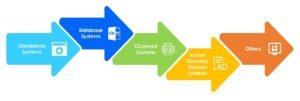
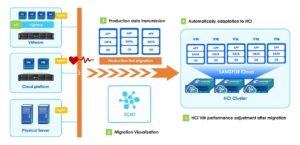
Enterprises migrating from VMware to other virtualization platforms typically follow a structured, low-risk approach supported by automation tools. The process begins with assessment and planning using discovery tools to map workloads and dependencies, followed by a pilot migration of non-critical systems to validate compatibility. Workload conversion tools then repackage VMs for the new hypervisor, enabling a phased cutover strategy that minimizes downtime and maintains fallback options. Finally, performance validation and optimization ensure workloads run efficiently before full-scale deployment.

This methodical approach lays a solid foundation for a smooth transition to platforms like Sangfor HCI, which addresses migration challenges through its streamlined virtualization structure and HCI architecture, built-in backup integration, and 24/7 local support—ensuring business continuity and operational confidence throughout the process.

Phase 1: Assessment & Planning

  • Audit existing VMware workloads, licenses, and dependencies.
  • Identify critical applications and downtime tolerances.
  • Use Sangfor’s assessment tools to create a migration roadmap.

Phase 2: Pilot Migration

  • Select non-critical workloads for initial testing.
  • Validate application performance, integration, and backup workflows.
  • Equip IT teams with hands-on training on the Sangfor HCI console.

Phase 3: Full Migration

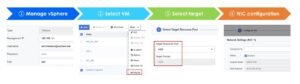
  • Leverage Sangfor migration utilities for VM conversion.
  • Apply phased cutover to minimize downtime.
  • Enable real-time replication to ensure data consistency.

Phase 4: Optimize the Migration

  • Provided with Sangfor tools and database tools.
  • Leverage built-in database migration tools for tuning.
  • Apply SCP with centralized management.

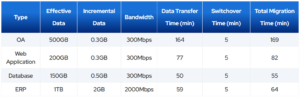
SCMT Migration Time and Interruption Duration Estimation

Tools & Support Options

  • Sangfor Cloud Migration Tools (SCMT): Streamlines virtual machine conversion for a smoother transition.
  • Professional Services: On-site experts provide hands-on support for complex migration scenarios.
  • 24/7 Global Support Centers: regional teams deliver responsive, localized assistance around the clock.
  • Training Programs: Interactive labs and practical sessions to upskill IT staff on Sangfor HCI.

Sangfor HCI delivers expert-driven innovation with native VM conversion tools for VMware environments, built-in replication and disaster recovery, and full-stack integration across compute, storage, networking, and security. Certified to work seamlessly with mainstream x86 servers and backup vendors, it minimizes migration risks while future-proofing your IT infrastructure.

Key Takeaways & What to Do Next

Migrating from VMware doesn’t have to be disruptive. With the right tools, a phased approach, and expert guidance, IT teams can transition to Sangfor HCI smoothly and with confidence.

Sangfor HCI is backed by global recognition, including being named a Representative Vendor in the 2025 Gartner® Market Guide for Full-Stack Hyperconverged Infrastructure Software and ranked as the 5th largest HCIS vendor by revenue worldwide for 2024 in Gartner® Market Share report . These recognitions reflect Sangfor’s commitment to innovation, reliability, and customer satisfaction, making it a trusted choice for future-ready IT infrastructure.

Click here to see the source website: VMware Migration Made Easy: A Strategic Exit Plan

— A New Recipe for Virtualization: Crafted for Simplicity and Flexibility

Author: Harris Zhang

Navigating the world of virtualization licensing can often feel like trying to solve a complex puzzle, with hidden costs and confusing rules. For years, VMware has been a go-to choice, much like a popular burger joint that everyone flocks to. But what happens when that favorite spot suddenly changes its menu, forcing you into expensive, bundled meals you don’t need?

Following Broadcom acquisition, many VMware users are facing this exact scenario: a landscape of complex licensing, forced product bundles, and soaring subscription costs that bring more headaches than benefits. If you’re tired of the licensing games and unexpected audits, it’s time to explore a more transparent and flexible alternative.

The New Reality of VMware’s Licensing

What exactly has changed for VMware users? The shift has been significant. The old “a la carte” model, where you could pick and choose the specific products you needed, is gone. Today, customers are pushed toward bundled solutions, which can lead to paying for features and capacity you simply don’t use.

Let’s break down the key challenges:

  • Forced Bundles: Essential security features like the vDefend Firewall are no longer available as standalone products. Instead, they are exclusively offered as add-ons to the comprehensive VMware Cloud Foundation (VCF) package. This means that to get one specific tool, you might be required to purchase an entire suite.
  • Soaring Subscription Costs: The move to a subscription model has come with steep price increases. A three-year subscription is now 50% more expensive, and a five-year term has doubled in price compared to the previous perpetual license model.
  • Mandatory Over-Licensing: As of April 2025, the minimum core purchase requirement per CPU is set to jump from 16 to 72 cores. This policy forces many customers to license far more capacity than they actually need, leading to significant unnecessary spending.
  • Expensive Storage Scaling: Expanding your storage with vSAN can also bring unexpected costs. If you need more storage than the initial free entitlement, you are required to re-license the entire raw capacity, making scaling a costly endeavor.

This new model has left many IT leaders feeling trapped, facing a future of unpredictable costs and diminishing flexibility.

The Sangfor Recipe: Simplicity, Flexibility, and Transparency

In contrast to this complexity, Sangfor offers a refreshing approach to virtualization pricing, built on clarity and choice. Think of it as a gourmet burger bar where you can build your own meal with exactly the toppings you want, without being forced to buy a combo.

Here’s how Sangfor’s model stands out:

  • A La Carte Freedom: Sangfor allows you to choose only the modules you need. Whether you require server virtualization (aSV), storage optimization (aSAN), or networking virtualization (aNET), you can select individual components to fit your specific requirements without paying for bundled extras.
  • Lean and Efficient: The platform is designed to be lightweight and efficient, free from unnecessary features. This ensures you get enterprise-grade performance without the luxury price tag.
  • All-Inclusive Bundles: While Sangfor offers bundled solutions like Sangfor Unified Cloud, these are designed as unified, comprehensive stacks that provide value without forcing unnecessary components on the user. You get a complete solution with security, container, database management, and disaster recovery built-in, but the choice is always yours.

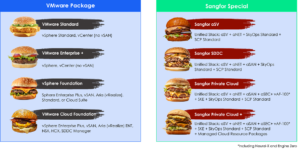
A Clear Menu: VMware vs. Sangfor

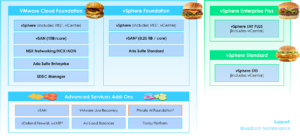
Let’s put the two models side-by-side. Where VMware now offers rigid, bundled packages like vSphere Foundation and VMware Cloud Foundation, Sangfor provides a flexible range of solutions that can be tailored to your needs.

This flexible structure ensures that you are only paying for the functionality you need, giving you greater control over your budget and infrastructure.

A Smooth and Progressive Transition

Worried about a complex migration? Sangfor is designed to co-exist with your current setup, allowing for a gradual and seamless transition. For instance, if you rely on Veeam or Veritas for backup in your VMware environment, you don’t have to abandon it. Sangfor HCI can integrate with Veeam or Veritas, allowing you to protect your existing investment while expanding your infrastructure with a more cost-effective solution.

You can also start by using Sangfor hDR or native aHM for disaster recovery for your VMware workloads or to manage both platforms from a unified interface before deciding on a full migration. This phased approach minimizes disruption and allows you to move at a pace that suits your business.

Just because one burger joint is famous doesn’t mean it’s the only option. The recent changes in VMware’s pricing and licensing have created an opportunity to seek out more agile, transparent, and cost-effective virtualization solutions.

With its “a la carte” model, lean architecture, and clear pricing, Sangfor offers a compelling alternative for organizations feeling the pressure of VMware’s rigid bundles and rising costs. Recognized by Gartner® as a Sample Vendor for VMware Alternative in Hyperconverged Infrastructure, Sangfor is a globally trusted choice for innovation and reliability.

If you’re ready to break free from licensing headaches and embrace a future of IT freedom and flexibility, it’s time to explore a new recipe for virtualization.

Click here to see the source website: A New Recipe for Virtualization: Crafted for Simplicity and Flexibility


PT Multipolar Technology Tbk Anti-Bribery Management Commitment

Starting on October 2025, PT Multipolar Technology Tbk (‘MLPT’) is committed in implementing Anti-Bribery Management System (ABMS), specifically in the Procurement, Stock & Delivery, and General Affairs Teams.
In the event of any alleged or suspected acts involving the giving, promising to give, or receiving from MLPT any item or benefit that may constitute bribery, gratification, fraud, violation of laws or regulations, conflict of interest under applicable laws and regulations, or a breach of MLPT’s code of ethics, reports can be submitted via email to: whistleblowing@multipolar.com

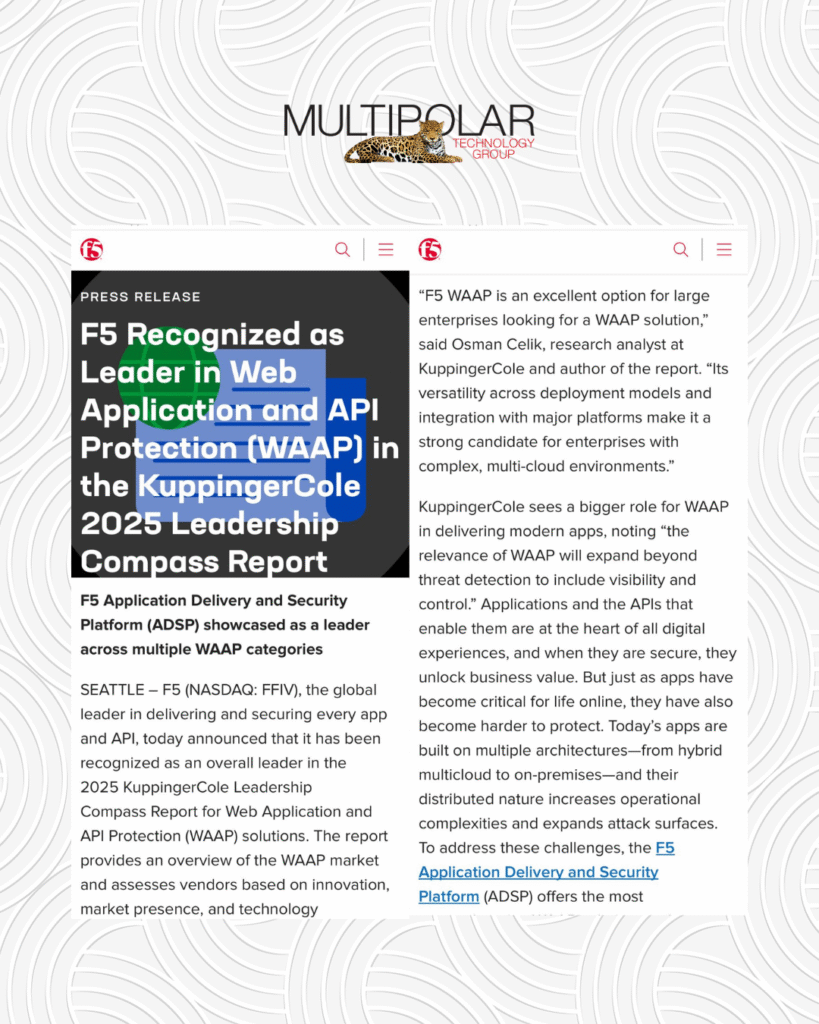
F5 Recognized as Leader in Web Application and API Protection (WAAP) in the KuppingerCole 2025 Leadership Compass Report

F5 Application Delivery and Security Platform (ADSP) showcased as a leader across multiple WAAP categories

SEATTLE  F5 (NASDAQ: FFIV), the global leader in delivering and securing every app and API, today announced that it has been recognized as an overall leader in the 2025 KuppingerCole Leadership Compass Report for Web Application and API Protection (WAAP) solutions. The report provides an overview of the WAAP market and assesses vendors based on innovation, market presence, and technology leadership. F5 is spotlighted as a frontrunner, setting the bar for excellence in cybersecurity defenses.

WAAP solutions merge traditional web application firewall (WAF) features with new tools that discover and protect apps and APIs at a granular level while delivering protection against automated threats and fraud, providing vulnerability and anomaly detection, and ensuring complete multi-layered DDoS mitigation.

“F5 WAAP is an excellent option for large enterprises looking for a WAAP solution,” said Osman Celik, research analyst at KuppingerCole and author of the report. “Its versatility across deployment models and integration with major platforms make it a strong candidate for enterprises with complex, multi-cloud environments.”

KuppingerCole sees a bigger role for WAAP in delivering modern apps, noting “the relevance of WAAP will expand beyond threat detection to include visibility and control.” Applications and the APIs that enable them are at the heart of all digital experiences, and when they are secure, they unlock business value. But just as apps have become critical for life online, they have also become harder to protect. Today’s apps are built on multiple architectures—from hybrid multicloud to on-premises—and their distributed nature increases operational complexities and expands attack surfaces. To address these challenges, the F5 Application Delivery and Security Platform (ADSP) offers the most comprehensive WAAP solution on the market and is the only platform that delivers, secures, and optimizes every app and API anywhere.

In addition to robust API protection, the Leadership Compass Report calls out the importance of secure DNS, client-side defense, web app scanning, and an AI-assisted operations interface in F5’s WAAP portfolio.

The report also emphasizes F5’s sophisticated security measures that protect against the OWASP Top 10 for APIs, inclusive of API discovery and testing functionalities using artificial intelligence (AI) and machine learning (ML). This strategic use of AI technology enables F5 to offer dynamic protection mechanisms that are both predictive and adaptive, safeguarding digital assets against evolving threats in the AI era.

The Leadership Compass Report highlights F5’s strength in several areas:

  • Incorporating agentic AI into the F5 Application Delivery and Security Platform to deliver contextual insights for threat management.
  • Comprehensive DDoS mitigation to limit disruptions while maintaining application availability.
  • AI and ML algorithms to mitigate and score risks by tracking user behavior and detecting malicious activities.
  • Scalable deployment models to support cloud, on-premises, containers, serverless platforms, and VM instances.

“The WAAP solutions built into the F5 ADSP stand at the forefront of safeguarding web applications in a rapidly changing cyber landscape across complex hybrid and multicloud environments,” said John Maddison, Chief Product and Corporate Marketing Officer at F5. “This acknowledgment reaffirms F5’s position as a WAAP leader and our effectiveness in meeting customer needs and protecting any application or API.”

Download the report and read the companion blog to learn more about F5’s leadership in WAAP solutions.

About F5

F5, Inc. (NASDAQ: FFIV) is the global leader that delivers and secures every app. Backed by three decades of expertise, F5 has built the industry’s premier platform—F5 Application Delivery and Security Platform (ADSP)—to deliver and secure every app, every API, anywhere: on-premises, in the cloud, at the edge, and across hybrid, multicloud environments. F5 is committed to innovating and partnering with the world’s largest and most advanced organizations to deliver fast, available, and secure digital experiences. Together, we help each other thrive and bring a better digital world to life.

For more information visit f5.com
Explore F5 Labs threat research at f5.com/labs
Follow to learn more about F5, our partners, and technologies: Blog | LinkedIn | X | YouTube | Instagram | Facebook

F5 and BIG-IP are trademarks, service marks, or tradenames of F5, Inc., in the U.S. and other countries. All other product and company names herein may be trademarks of their respective owners.

# # #

This press release may contain forward looking statements relating to future events or future financial performance that involve risks and uncertainties. Such statements can be identified by terminology such as “may,” “will,” “should,” “expects,” “plans,” “anticipates,” “believes,” “estimates,” “predicts,” “potential,” or “continue,” or the negative of such terms or comparable terms. These statements are only predictions and actual results could differ materially from those anticipated in these statements based upon a number of factors including those identified in the company’s filings with the SEC.

Multipolar Technology Achieves ISO/IEC 27001:2022 Certification

Strengthening Our Commitment to Information Security and Operational Excellence

We are proud to announce that PT Multipolar Technology Tbk (MLPT) has officially upgraded and recertified its ISO 27001 certification from ISO/IEC 27001:2013 to ISO/IEC 27001:2022. This achievement reflects our ongoing commitment to implementing a robust Information Security Management System (ISMS) aligned with global recognized best practices.

“The ISO certification is not a fancy thing to have or just to meet the requirement. It is a guide that supports our key strategy: operational excellence and human resources development.”
Wahyudi Chandra, Vice President Director of Multipolar Technology

The certification was issued by PT BSI Group Indonesia (BSI) and is valid for three years, from July 27, 2025 to July 26, 2028. The certified scope includes Sales, Hardware Implementation, Software Development and Implementation, Professional Services, Project Management, and Operation Support.

This milestone reinforces our dedication to safeguarding customer data, enhancing service reliability, and continuously improving operational standards.

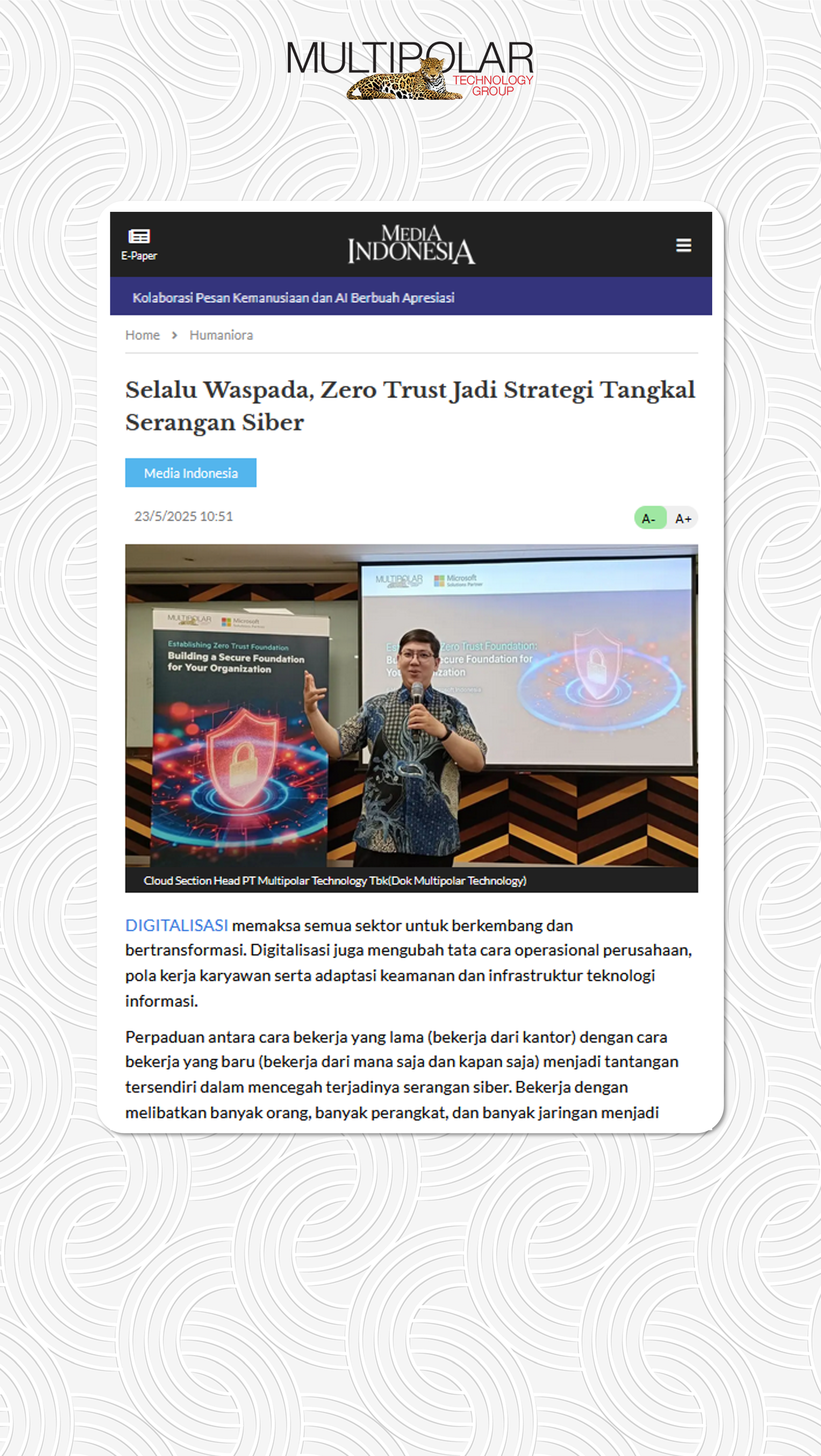
Selalu Waspada, Zero Trust Jadi Strategi Tangkal Serangan Siber

DIGITALISASI memaksa semua sektor untuk berkembang dan bertransformasi. Digitalisasi juga mengubah tata cara operasional perusahaan, pola kerja karyawan serta adaptasi keamanan dan infrastruktur teknologi informasi.

Perpaduan antara cara bekerja yang lama (bekerja dari kantor) dengan cara bekerja yang baru (bekerja dari mana saja dan kapan saja) menjadi tantangan tersendiri dalam mencegah terjadinya serangan siber. Bekerja dengan melibatkan banyak orang, banyak perangkat, dan banyak jaringan menjadi celah yang lebih besar bagi para penjahat siber untuk melakukan tindak kejahatan.

“Itu sebabnya, perlu menerapkan strategi Zero Trust sebagai landasan untuk mencegah terjadinya serangan siber,” kata Davit Wijaya Kosim, Cloud Section Head PT Multipolar Technology Tbk (IDX: MLPT), perusahaan system integrator terkemuka di Tanah Air dalam seminar bertema “Establishing Zero Trust Foundation: Building a Secure Foundation for Your Organization” yang diselenggarakan oleh perusahaannya di kantor Microsoft Indonesia, Jakarta, Selasa (6/5).

Davit menjelaskan, Zero Trust merupakan model arsitektur keamanan yang didasarkan pada prinsip Never Trust, Always Verify (Jangan Pernah Percaya, Selalu Verifikasi). Artinya, jangan pernah percaya kepada siapa pun, perangkat apa pun, dan jaringan mana pun, meski ketiganya berada di dalam perimeter perusahaan. Setiap permintaan akses harus divalidasi (autentikasi dan otorisasi) terlebih dahulu.

Yang divalidasi, terutama identitas pengguna, status perangkat, lokasi geografis, waktu akses, sensitivitas data yang diminta, dan pola perilaku sebelumnya. Tujuan utama penerapan prinsip Zero Trust adalah mencegah akses tidak sah, membatasi pergerakan lateral penyerang di jaringan, mengurangi dampak pelanggaran data, dan meningkatkan postur keamanan secara menyeluruh.

Untuk menerapkannya, perusahaan bisa menggunakan berbagai solusi yang mendukung strategi Zero Trust yang ditawarkan oleh pengembang teknologi, salah satunya Microsoft Defender XDR . Microsoft Defender XDR adalah platform keamanan terpadu yang dirancang untuk mendeteksi, menyelidiki, dan merespons ancaman siber secara menyeluruh di seluruh infrastruktur digital organisasi.

Solusi Microsoft XDR bekerja dengan menganalisis jaringan, log otentikasi, dan aktivitas pengguna untuk mengidentifikasi anomali yang ada pada perangkat, e-mail, identitas pengguna hingga aplikasi cloud. “Konsep Zero Trust adalah kita tidak memercayai siapa pun, kita mencegah semua kemungkinan yang ada, sehingga dapat mencegah serangan dari luar,” jelas Davit.

Tiga prinsip dasar strategi Zero Trust, yaitu verifikasi secara eksplisit (selalu melakukan autentikasi dan otorisasi berdasarkan semua sinyal dan data kontekstual), batasi dengan hak akses paling minimum (pengguna hanya mendapatkan akses yang mereka butuhkan untuk melakukan tugas mereka), dan asumsikan adanya pelanggaran (selalu menganggap sistem bisa disusupi, jadi desainlah sistem keamanan agar tetap terbatas).

Menurut Davit, Microsoft Defender XDR tergolong platform Zero Trust yang paling bisa dipercaya. Oleh sebab itu, solusi ini layak dipertimbangkan oleh perusahaan-perusahaan di Indonesia dalam upaya mencegah serangan siber sedini mungkin. “Sebagai Microsoft Solutions Partner, Multipolar Technology siap membantu mengimplementasikannya. Kami memiliki tim ahli untuk itu,” katanya.

Multipolar Technology Ingatkan Pentingnya Penerapan Prinsip Zero Trust

Zero Trust menjadi strategi penangkalan serangan siber sejak dini yang penting bagi perusahaan.

Microsoft Defender XDR merupakan salah satu solusi penerapan strategi Zero Trust.

Jakarta, TechnoBusiness ID ● Seiring dengan digitalisasi di berbagai lini yang terus berkembang, ada transformasi besar yang mengubah bagaimana cara perusahaan beroperasi, bagaimana pola karyawan bekerja, serta bagaimana sistem keamanan dan infrastruktur teknologi informasi harus beradaptasi. Semua itu menjadi satu kesatuan tak terpisahkan yang harus dikelola dengan sangat baik.

Mengapa demikian? Karena, perpaduan antara cara bekerja yang lama (bekerja dari kantor) dengan cara bekerja yang baru (bekerja dari mana saja dan kapan saja) menjadi tantangan tersendiri dalam mencegah terjadinya serangan siber. Bekerja dengan melibatkan banyak orang, banyak perangkat, dan banyak jaringan menjadi celah yang lebih besar bagi para penjahat siber untuk melakukan tindak kejahatan.

“Itu sebabnya, perlu menerapkan strategi Zero Trust sebagai landasan untuk mencegah terjadinya serangan siber,” kata Davit Wijaya Kosim, Cloud Section Head PT Multipolar Technology Tbk (IDX: MLPT), perusahaan system integrator terkemuka di Tanah Air dalam seminar bertema “Establishing Zero Trust Foundation: Building a Secure Foundation for Your Organization” yang diselenggarakan oleh perusahaannya di kantor Microsoft Indonesia, Jakarta, Selasa (6/5).

Davit menjelaskan, Zero Trust merupakan model arsitektur keamanan yang didasarkan pada prinsip Never Trust, Always Verify (Jangan Pernah Percaya, Selalu Verifikasi). Artinya, jangan pernah percaya kepada siapa pun, perangkat apa pun, dan jaringan mana pun, meski ketiganya berada di dalam perimeter perusahaan. Setiap permintaan akses harus divalidasi (autentikasi dan otorisasi) terlebih dahulu.

Yang divalidasi, terutama identitas pengguna, status perangkat, lokasi geografis, waktu akses, sensitivitas data yang diminta, dan pola perilaku sebelumnya. Tujuan utama penerapan prinsip Zero Trust adalah mencegah akses tidak sah, membatasi pergerakan lateral penyerang di jaringan, mengurangi dampak pelanggaran data, dan meningkatkan postur keamanan secara menyeluruh.

Untuk menerapkannya, perusahaan bisa menggunakan berbagai solusi yang mendukung strategi Zero Trust yang ditawarkan oleh pengembang teknologi, salah satunya Microsoft Defender XDR. Microsoft Defender XDR  adalah platform keamanan terpadu yang dirancang untuk mendeteksi, menyelidiki, dan merespons ancaman siber secara menyeluruh di seluruh infrastruktur digital organisasi.

Solusi Microsoft XDR bekerja dengan menganalisis jaringan, log otentikasi, dan aktivitas pengguna untuk mengidentifikasi anomali yang ada pada perangkat, e-mail, identitas pengguna hingga aplikasi cloud. “Konsep Zero Trust adalah kita tidak memercayai siapa pun, kita mencegah semua kemungkinan yang ada, sehingga dapat mencegah serangan dari luar,” jelas Davit.

Tiga prinsip dasar strategi Zero Trust, yaitu verifikasi secara eksplisit (selalu melakukan autentikasi dan otorisasi berdasarkan semua sinyal dan data kontekstual), batasi dengan hak akses paling minimum (pengguna hanya mendapatkan akses yang mereka butuhkan untuk melakukan tugas mereka), dan asumsikan adanya pelanggaran (selalu menganggap sistem bisa disusupi, jadi desainlah sistem keamanan agar tetap terbatas).

Menurut Davit, Microsoft Defender XDR tergolong platform Zero Trust yang paling bisa dipercaya. Oleh sebab itu, solusi ini layak dipertimbangkan oleh perusahaan-perusahaan di Indonesia dalam upaya mencegah serangan siber sedini mungkin. “Sebagai Microsoft Solutions Partner, Multipolar Technology siap membantu mengimplementasikannya. Kami memiliki tim ahli untuk itu,” katanya.●

—Vino Darmawan, TechnoBusiness ID

Penerapan Zero Trust Jadi Solusi Tangkal Serangan Siber

Jakarta – Seiring dengan digitalisasi di berbagai lini yang terus berkembang, ada potensi serangan siber yang mengintai. Mengingat transformasi digital mengubah cara bagaimana cara perusahaan beroperasi, pola karyawan bekerja, serta sistem keamanan dan infrastruktur teknologi informasi harus beradaptasi.

Davit Wijaya Kosim, Cloud Section Head PT Multipolar Technology Tbk menjelaskan, perpaduan antara cara bekerja yang lama (bekerja dari kantor) dengan cara bekerja yang baru (bekerja dari mana saja dan kapan saja) menjadi tantangan tersendiri dalam mencegah terjadinya serangan siber.

”Bekerja dengan melibatkan banyak orang, banyak perangkat, dan banyak jaringan menjadi celah yang lebih besar bagi para penjahat siber untuk melakukan tindak kejahatan. Itu sebabnya, perlu menerapkan strategi Zero Trust sebagai landasan untuk mencegah terjadinya serangan siber [DK1] ,” kata Davit dikutip 22 Mei 2025.

Davit menjelaskan, Zero Trust merupakan model arsitektur keamanan yang didasarkan pada prinsip Never Trust, Always Verify (Jangan Pernah Percaya, Selalu Verifikasi).

“Artinya, jangan pernah percaya kepada siapa pun, perangkat apa pun, dan jaringan mana pun, meski ketiganya berada di dalam perimeter perusahaan. Setiap permintaan akses harus divalidasi (autentikasi dan otorisasi) terlebih dahulu,” jelasnya.

Yang divalidasi, terutama identitas pengguna, status perangkat, lokasi geografis, waktu akses, sensitivitas data yang diminta, dan pola perilaku sebelumnya. Tujuan utama penerapan prinsip Zero Trust adalah mencegah akses tidak sah, membatasi pergerakan lateral penyerang di jaringan, mengurangi dampak pelanggaran data, dan meningkatkan postur keamanan secara menyeluruh.

Untuk menerapkannya, perusahaan bisa menggunakan berbagai solusi yang mendukung strategi Zero Trust yang ditawarkan oleh pengembang teknologi, salah satunya Microsoft Defender XDR . Microsoft Defender XDR adalah platform keamanan terpadu yang dirancang untuk mendeteksi, menyelidiki, dan merespons ancaman siber secara menyeluruh di seluruh infrastruktur digital organisasi.

Solusi Microsoft XDR bekerja dengan menganalisis jaringan, log otentikasi, dan aktivitas pengguna untuk mengidentifikasi anomali yang ada pada perangkat, e-mail, identitas pengguna hingga aplikasi cloud.

“Konsep Zero Trust adalah kita tidak memercayai siapa pun, kita mencegah [DK2] semua kemungkinan yang ada, sehingga dapat mencegah serangan dari luar,” jelas Davit.

Tiga prinsip dasar strategi Zero Trust, yaitu verifikasi secara eksplisit (selalu melakukan autentikasi dan otorisasi berdasarkan semua sinyal dan data kontekstual), batasi dengan hak akses paling minimum (pengguna hanya mendapatkan akses yang mereka butuhkan untuk melakukan tugas mereka), dan asumsikan adanya pelanggaran (selalu menganggap sistem bisa disusupi, jadi desainlah sistem keamanan agar tetap terbatas).

Menurut Davit, Microsoft Defender XDR tergolong platform Zero Trust yang paling bisa dipercaya.

“Solusi ini layak dipertimbangkan oleh perusahaan-perusahaan di Indonesia dalam upaya mencegah serangan siber sedini mungkin,” tutupnya.